
Garage Gym Flooring: Start With the Floor
The floor decides whether a garage conversion looks finished or half-done. What to put down for a garage gym, office, or man cave.
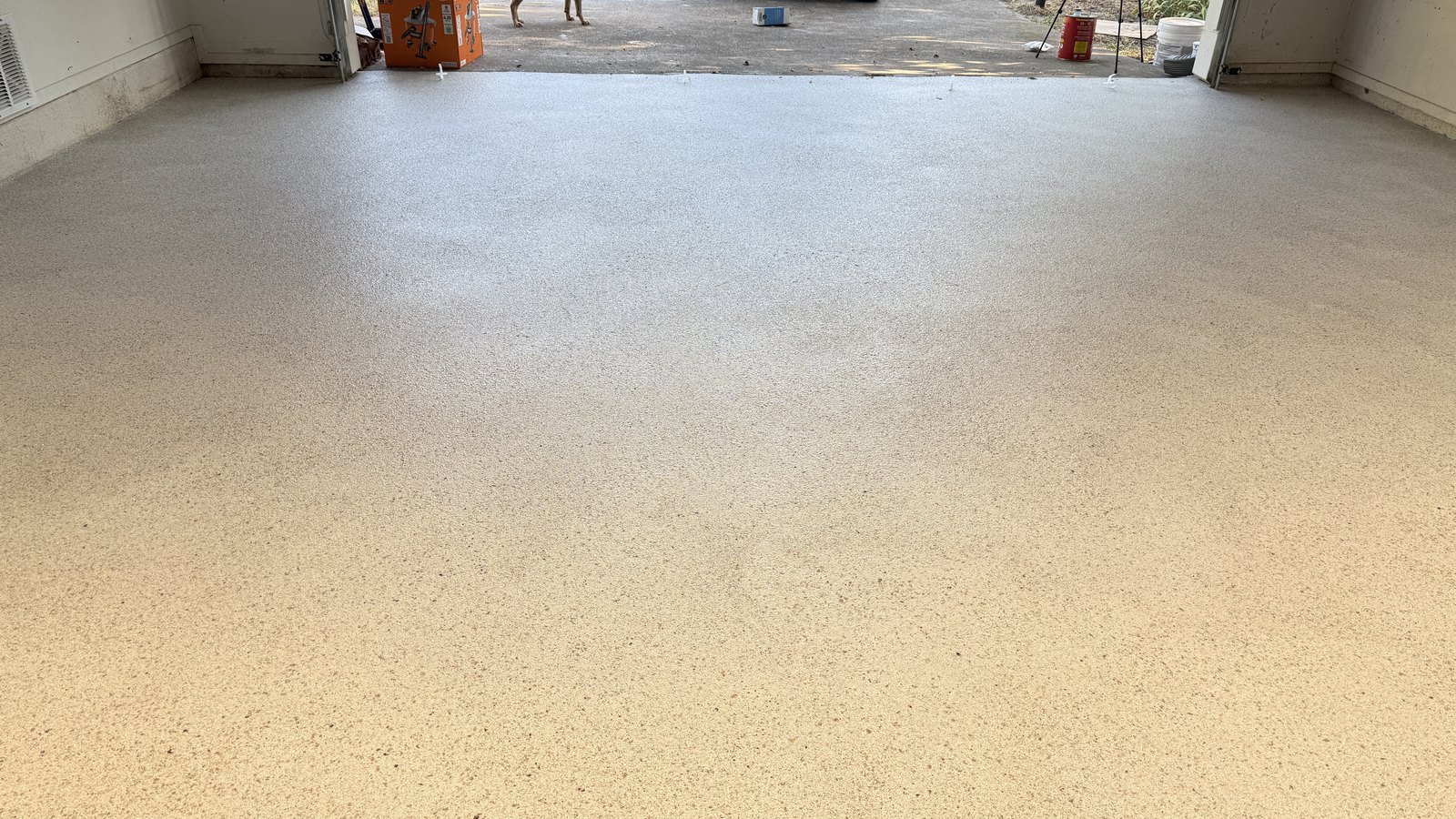
You’ve decided the garage is going to be more than a garage. A home gym, an office, a workshop, a man cave, a studio. You’re picturing the rack in the corner, the desk by the window, the TV on the wall.
Now look down. The floor in that picture is probably still stained gray concrete, because that’s what’s there now. And that floor is the one thing that decides whether the finished space looks like a room or like a garage you crammed some furniture into.
The floor is the tell
You can hang drywall, add a mini-split, run good lighting, and drop real money on equipment. Walk in, and your eye still goes to the floor. Bare or painted concrete tells everyone this used to be a garage and mostly still is.
A finished floor flips that read instantly. It brightens the whole space, it hides the dust that concrete throws off, and it gives the room a base that looks intentional. Spend on one thing in a garage conversion and the floor returns the most, because it’s the surface under everything else you’re adding.
Why bare concrete fights every conversion
Raw concrete has three problems for a lived-in space:
It dusts. Concrete sheds a fine powder that lands on your equipment, your desk, and everything you store. In a gym you feel it on your hands. In an office you wipe it off the monitor.
It stains and it’s cold and hard. Every drop soaks in. It reads industrial no matter how you decorate.
It’s slick when it matters. Sweat in a gym, a spilled drink in a man cave, and smooth concrete gets dangerous fast.
Paint doesn’t fix this. A garage floor paint is a thin film that peels where you walk and roll, and it’s back to bare patches in a year or two. We break down why paint fails and how it compares to a real coating if you’re weighing that route.
What to put down instead
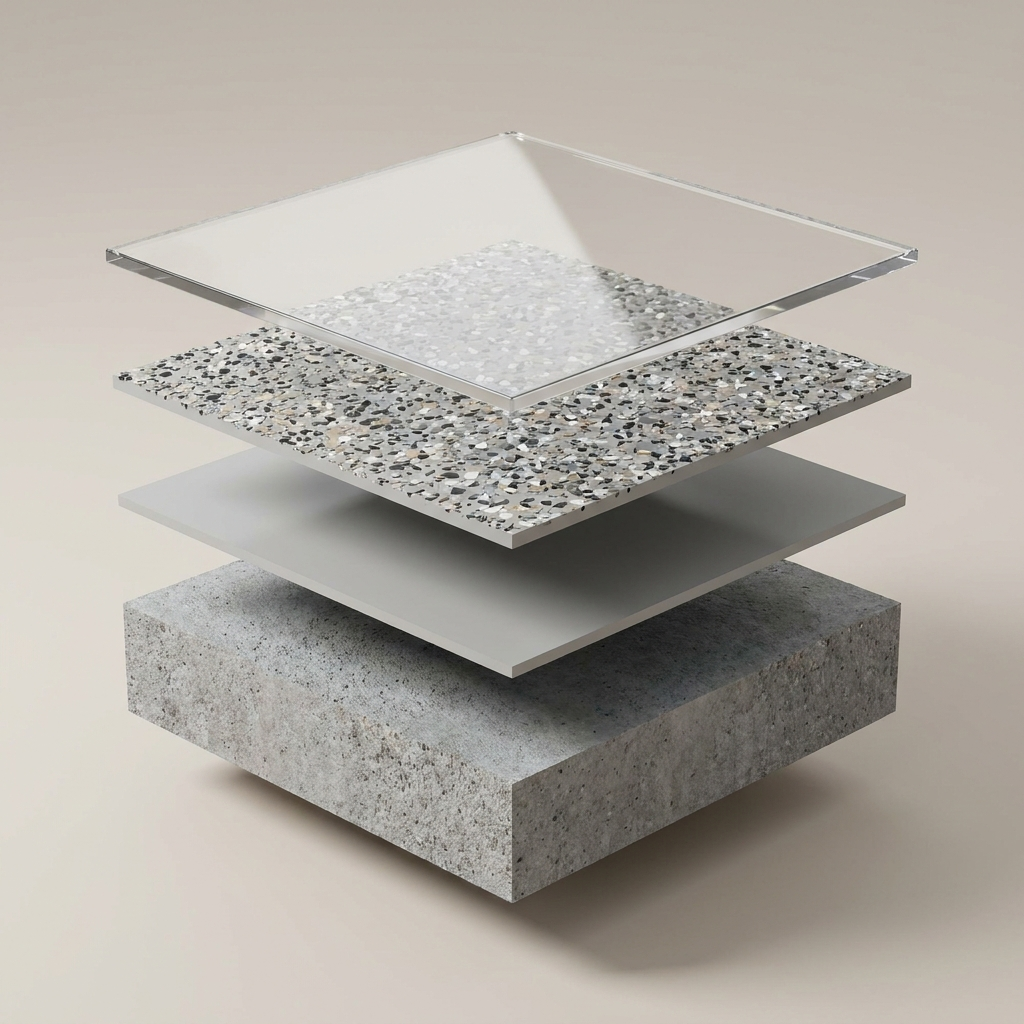
A flake epoxy and polyaspartic system. Same floor we build in any garage, and it happens to be ideal for a conversion:
- A diamond-ground slab so the coating bonds instead of sitting on top.
- A high-build epoxy base that seals the concrete and stops the dusting for good.
- A full color-flake broadcast in whatever color fits the room, which gives you grip underfoot and hides wear.
- A UV-stable polyaspartic topcoat that takes the abuse and cleans with a mop.
By what you’re building
The garage gym. This is the one people ask about most. A flake floor takes dropped dumbbells, rolling treadmills, and a loaded rack. It gives you traction the bare slab never did, and it wipes down after a session instead of holding the sweat. Keep a mat or a platform under heavy deadlifts and a rack, the way you would on any floor, but seal the concrete underneath so the whole room reads finished and stays clean.
The office or studio. Here the floor is about looking like a room you’d want to work in. A lighter flake blend brightens a space with few windows, chairs roll on it clean, and it kills the dust that a home office by the garage door always seems to collect.
The man cave or lounge. You’re going for a space that feels like part of the house. A darker or richer flake blend under a couch, a bar, and a big screen does more for that feel than anything you’ll hang on the wall.
The workshop. Oil, dropped tools, and solvents wipe off a sealed floor. A shop-floor build covers the heavier-duty version if you’re running real equipment.
Do the floor first
The order matters more than people expect. Coat the floor, let it cure, then move the gym, the desk, or the furniture in. Try to do it the other way and you’re masking, lifting, and cutting in around everything you just set up, and the job takes longer and looks worse.
If your conversion is still in the planning stage, put the floor near the front of the list, right after any framing or wiring that has to happen at the slab. Everything else sits on top of it.
What it costs, and why it’s the easy yes
We coat garages at a flat $6 per square foot, all-inclusive, so a standard two-car space runs about $3,000 to $3,600. Set that next to what a full garage conversion costs by the time you’ve added lighting, climate control, drywall, and the equipment or furniture, and the floor is a small slice of the budget that carries the whole look. Our cost guide breaks down where the number comes from.
It also holds its value. A coated floor lasts 15 to 20 years and takes both your new gym and a car, so if the room ever goes back to being a garage, the floor doesn’t care.
The bottom line
A garage conversion lives or dies on whether it still feels like a garage. The floor is what settles that. Grind the slab, seal it, flake it, and top it, and the room reads finished the second you walk in, whether you’re loading a barbell, sitting at a desk, or dropping onto a couch.
We coat garage floors for gyms, offices, shops, and man caves across Granbury, Weatherford, Aledo, Stephenville, and Glen Rose. Tell us what you’re turning the garage into and we’ll get you a number for the floor under it.
Common questions
What is the best floor for a garage gym?
A flake epoxy and polyaspartic system. It takes dropped dumbbells and rolling equipment, cleans up with a mop, and gives you grip underfoot instead of the slick, dusty concrete a rubber mat sits on. You still use mats under a rack or a platform, but the floor underneath should be sealed.
Can I put a floor down before I finish converting my garage?
That's the right order. Coat the floor first, then move in the gym equipment, the desk, or the couch. Doing it after means working around everything you just set up, and any flooring that goes down over bare concrete without prep will lift later anyway.
Does an epoxy floor make a garage feel like a real room?
More than anything else you can do for the money. Bare concrete reads as a garage no matter what you put in it. A finished flake floor bounces light, hides dust, and makes the space feel like part of the house instead of a bay you park in.
Will a coated garage floor handle a home gym and a car?
Yes. The same system that survives hot tires and a two-ton car handles a squat rack, a treadmill, and dropped weights. If you're going full gym, we can talk about where to add extra protection, but the base floor is built for both.