
The Truth About 'Lifetime' Garage Floor Warranties
A lifetime garage floor warranty sounds like the safe pick. What that word covers, why moisture ends most claims, and what to ask.
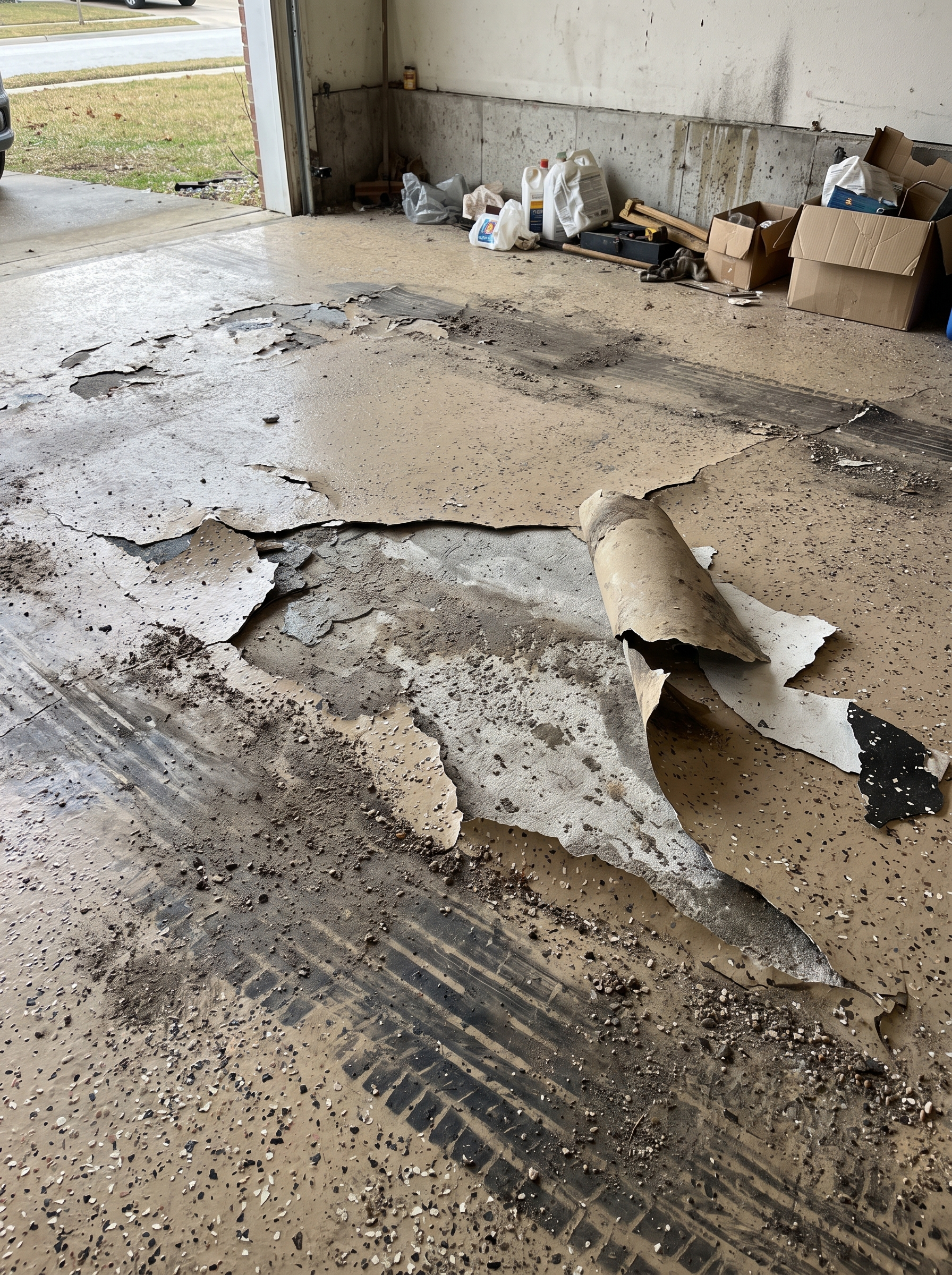
You’re comparing garage floor quotes and one of them says lifetime. It sounds like the safe pick, so it’s tempting to stop reading there.
No rule sets how long a lifetime warranty lasts in this trade. It lasts as long as the document says it lasts, and the document is where everything interesting lives. Length is cheap to print. Coverage is what you’re buying.
Two things decide whether your floor holds: how the crew prepped the slab, and how much moisture moves up through it. Nearly every exclusion you’ll find traces back to one of those two. Read the fine print with that in mind and the document starts telling you what the company planned to skip.
Whose lifetime?
Sometimes it means the life of the coating, which the company defines. Sometimes it means as long as you own the home, so coverage ends the day you sell, right when a buyer would care about it. Sometimes it covers one narrow failure while the failure you’re worried about is capped at a shorter number.
The word does the selling. The document does the limiting.
The two failures every warranty is written around
Ask someone who has been coating floors for years why they fail and surface prep comes up before anything else.
Concrete is sealed and slick on top. A coating needs an opened surface with enough texture to grab, and diamond grinding is how a crew creates that mechanically. The shortcut is acid etching, which roughens the surface without getting anywhere near the profile a thick coating needs. Manufacturers publish a required surface profile in their own instructions. A ground floor hits it. An etched one doesn’t. When a floor lets go in sheets a year later, poor prep is the usual reason.
Moisture is the other one. Water vapor moves up through a slab from the soil under it, and if it has nowhere to go it collects beneath the coating and pushes it off the concrete. A slab poured without a vapor barrier under it, or one on a lot that drains toward the garage, will read high. Your floor can look perfect for eight months and then lift in a sheet the size of a truck hood.
These two connect, and that’s the part worth carrying with you. Grinding the slab is the moment a crew has the floor open and the concrete exposed, which is when you test it. A company that grinds properly and meters the slab before coating has handled both leading causes of failure. A company that skips the grinder to save four hours usually skipped the moisture test too. That combination is what the exclusions in the next section exist to cover.
The fine print that guts it
Read a few of these documents all the way through and the same clauses keep turning up.
The lifetime part covers one narrow thing. A document titled “Limited Lifetime Warranty” often covers the coating for life against yellowing or color change, then caps peeling, flaking, and bond failure at a shorter term, commonly around 15 years. They put the impressive word on the cheapest failure to fix. It runs the other direction too, with some companies covering the bond for life while excluding fading from sunlight. Find out which failure the word is attached to.
They prorate the payout. Some companies pay based on remaining useful life, so a failure in year 12 of a 15-year term is worth a fraction of the same failure in year 2. Fifteen years and fifteen years of full coverage are two different products.
Labor stops at one year. Many warranties cover replacement material for the long term and labor for 12 months. If your floor lifts in year six, the company owes you a bucket of product and you pay to grind off the old coating and reinstall. Labor is most of the cost of redoing a floor, which makes this line matter more than the length.
Moisture is limited or excluded. Most companies set a threshold and exclude anything above it, and most exclude water pushing up from below outright.
It ends when you sell. Many cover the original owner only. A few transfer, some only if you sell within the first year, and the common case is coverage that dies with the sale and adds nothing to your resale.
You get a short window to report a problem. Thirty days from when you notice it is a standard requirement. Spot a small lift near the door in March, get busy with work, mention it in May, and the company can deny a lifetime warranty on timing alone.
Repair is the only remedy, and repairs don’t match. The company owes you a repair or recoat of the affected area, not a refund and not a new floor. Most documents state that flake colors vary between batches and get discontinued, so your repaired section can differ in color, tone, or sheen.
A repair doesn’t restore your term. Some companies give the repaired area its own short window, sometimes 30 days, instead of putting your original coverage back.
Cracks get carved out. It’s common to see no coverage on cracks, crack repair, or the concrete itself, whether or not you paid for crack repair during the install.
The company decides what caused the failure. Many documents reserve that judgment to the contractor in those words. If they determine moisture caused it, and moisture is excluded, the claim is over.
There are fees to make a claim. Trip charges and service minimums turn up regularly, along with an invoice you owe if the company decides your problem wasn’t a warranty issue.
None of this comes up in the sales conversation. It comes up in the document, after you’ve signed.
Moisture: the number one reason a claim gets denied
Of everything in the fine print, the moisture exclusion is the one most likely to end your claim, and it’s worth knowing where the number comes from.
Coating manufacturers set a limit on how much moisture their material can handle, and most companies set their warranty exclusion at that same number. Your coverage protects you right up to the point where the material maker stops guaranteeing the product, and no further. The thresholds vary between companies too, and nobody explains to the buyer what their own slab reads.
The part that catches homeowners is when the test happens. Companies run it after a floor has failed, as part of denying the claim, instead of before the sale when the reading would have changed how the floor got built. Some documents exclude moisture damage while stating in the same paragraph that the company takes no responsibility for determining whether moisture exists.
So the failure that ends the most claims is one plenty of companies never checked for before taking a deposit. If you heard the word moisture for the first time after your floor lifted, along with a quote to fix it, you’ve met this clause. We break that failure down in the 1-day floor guide.
The follow-up question is short. If your warranty excludes moisture above a certain number, did anyone measure my slab before quoting the job?
Compare these, not the length
A longer warranty that excludes your failure pays you nothing. A shorter one that covers it pays. When one company prints lifetime and another gives you a plain number, the number tells you close to nothing on its own.
Three answers tell you most of what you need. Does it pay when the floor lifts from moisture? Does it cover labor, and for how many years? Does it survive when you sell the house?
There’s one more worth asking, and it isn’t a knock on anybody. Some warranties come from the installer and some pass through from the product manufacturer, and they cover different things. Ask which one you’re getting, and ask for the manufacturer’s document too if one exists.
Questions to ask your coating company
Bring these to any quote, including ours.
- Does the warranty cover moisture, or is it excluded above a threshold?
- Did you test my slab for moisture before quoting, or does that happen after a problem?
- Do you diamond grind the slab or acid etch it?
- Is labor covered, and for how many years?
- Which failure is the lifetime attached to, and what’s capped shorter?
- Is coverage prorated as it ages?
- How long do I have to report a problem after I notice it?
- Does it transfer if I sell?
- Can I read the full warranty document before I sign anything?
That last one does most of the work. A company standing behind its floor hands you the document at the quote. If the terms show up after the deposit, you’ve learned what you needed to know.
What ours covers
Fair is fair, so here are our answers to our own questions. We don’t use the word lifetime. Your garage gets 10 years, and here is what sits inside it.
We cover moisture. If our coating delaminates because vapor pushed up through the slab, that’s covered. We put a moisture-vapor-barrier base on every interior floor and we stand behind it. That’s the exclusion you’ll find in most warranties, and it’s the one we wrote in.
We test your slab before we coat it, not after it fails. We grind the floor first, then meter the concrete, and we write the reading on your work order and have you initial it. Nobody has to argue years later about what the slab looked like that day. If it reads too wet for the system, we tell you before we start and recommend heavier mitigation, rather than discovering it during a claim.
We cover peeling, flaking, blistering, and delamination from a defect in our materials or our work.
We cover hot-tire pickup. The tires that lift a weak coating are covered here.
We cover yellowing. If the clear coat ambers from sun and UV, that’s ours.
Labor is included. We repair or recoat the affected area at no charge to you for materials or labor, for the full 10 years. Not one year of labor and nine years of free product.
It transfers once. Sell the house and the remaining term goes to the buyer. Tell us in writing within 30 days of closing.
It isn’t prorated. Year nine is covered the same as year one.
We handle claims ourselves. We installed your floor and we answer for it. No mail-in program, no manufacturer three states away, no franchise pointing you to another franchise.
Patios and outdoor concrete carry 2 years, and commercial floors 1 year, because sun, freeze-thaw, and forklifts are a different fight than a home garage.
And the parts where we’re the same as everyone. We ask you to report a problem in writing within 30 days of noticing it, so we can look before it spreads. We warrant our coating, not your concrete, so slab movement, cracks, and a slab breaking down on its own sit outside it. We repair the affected area rather than replacing the whole floor or writing a refund, a repair carries the remainder of your term instead of starting a new one, and we can’t promise a perfect color match on a spot repair because flake dye lots vary. There’s a $100 trip charge if we schedule a repair and show up to a garage we can’t work in.
That’s the document. Ask us for the whole thing at your quote and we’ll hand it to you before you decide anything.
The bottom line
A warranty is a company betting on its own prep. If a crew grinds your slab to a proper profile, meters it for moisture before coating, and bonds a vapor barrier into the floor, they’ve handled both leading causes of failure and have little reason to hide behind exclusions. Skip those steps and the exclusions are what protects the company from its own shortcut.
Don’t buy a garage floor on one adjective. Read which failure the word covers, ask who pays for labor and for how long, ask whether it survives a sale, and ask the two questions that decide whether your floor lasts at all: how are you prepping my slab, and did anyone measure it for moisture before quoting the job?
We coat garages across Granbury, Weatherford, Stephenville, Glen Rose, Aledo, and the southwest Fort Worth area, and you can see what it costs before we ever visit.
Common questions
Is a lifetime garage floor warranty worth it?
Only once you read what it covers. Many lifetime warranties exclude moisture, cover replacement material with one year of labor, and end the day you sell. A shorter warranty that pays on moisture and labor is worth more than a lifetime one written so it never pays.
What does a lifetime garage floor coating warranty actually cover?
Usually one narrow failure. The lifetime portion often covers yellowing or color change while the coating's bond to the concrete is capped around 15 years and prorated, so a late claim pays a fraction. Check which failure the word is attached to.
Do garage floor coating warranties cover moisture?
Most limit or exclude it, and moisture ends more claims than anything else. Companies set a moisture threshold and exclude anything above it, and many never measure your slab before taking the job. Some warranties exclude moisture while also stating the company takes no responsibility for determining whether moisture exists.
What makes a garage floor coating fail?
Surface prep and moisture. Concrete has to be diamond ground to an open profile so the coating can grip, because acid etching does not create enough texture for a thick coating to hold. Grinding is also when the crew is positioned to test the slab, which ties the two together.
Does a garage floor warranty transfer if I sell my house?
Most do not. Many cover the original owner only, so the coverage ends the day you sell, which is when a buyer would value it. Some transfer only within the first year. Transferable warranties exist, so ask.
Is labor covered under a lifetime garage floor warranty?
Often for the first year only. The long-term portion usually covers replacement material while labor stops at 12 months. Labor is most of the cost of redoing a floor, which makes that detail matter more than the number of years.